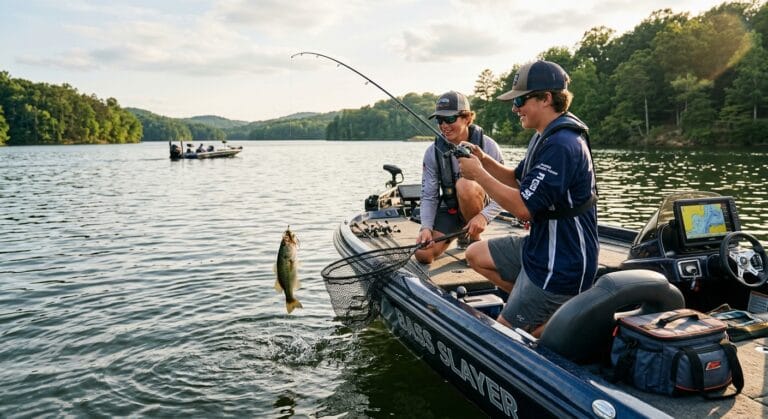
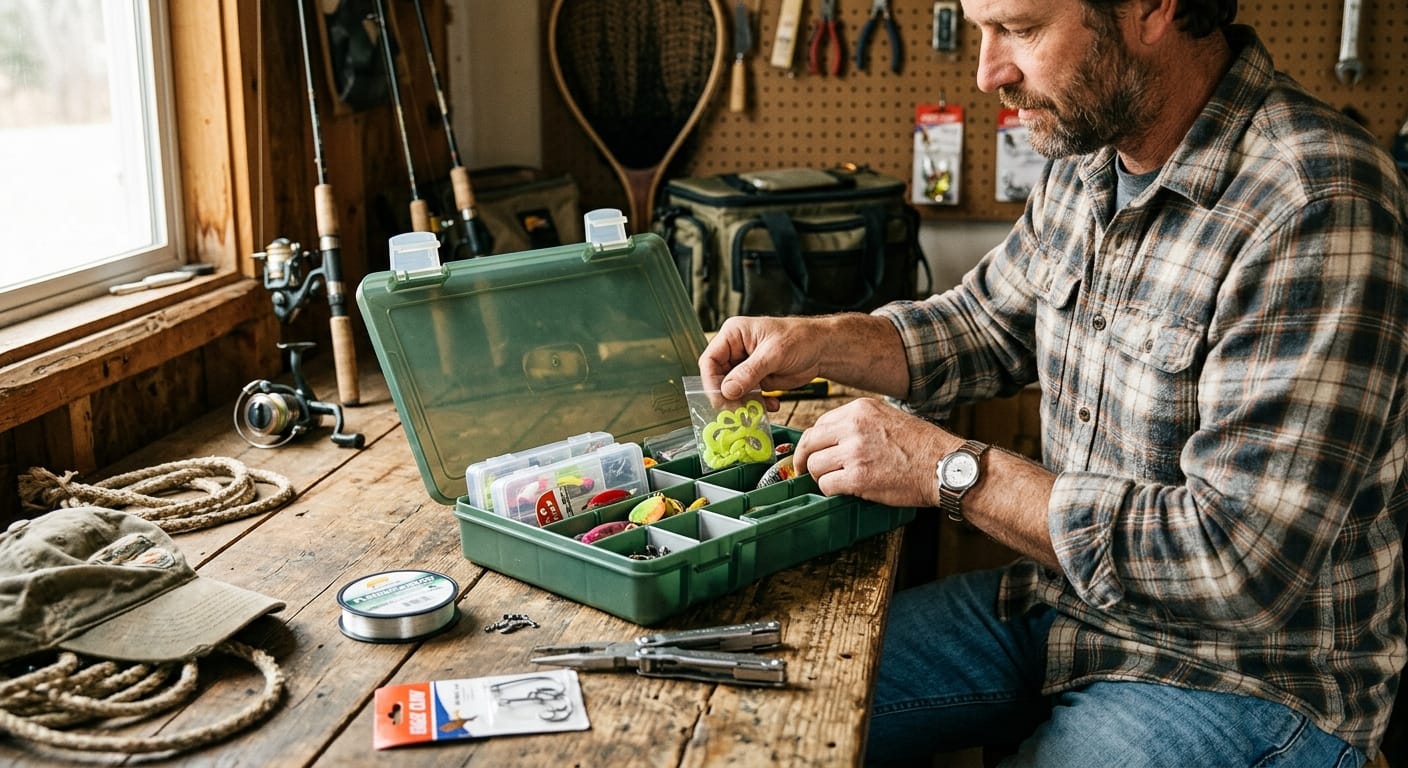
A first-year high school angler realistically needs between $300 and $600 in tackle and gear before travel costs enter the picture. The three levers that keep that number from climbing higher are buying soft plastics and terminal tackle in bulk as a team, running one coordinated fundraiser early in the season, and resisting the urge to buy technique-specific baits before you know what the tournament water actually calls for.
Where does the money actually go for a first-year tournament angler?
The cost stacks up faster than most families expect because rods, reels, line, soft plastics, hard baits, hooks, weights, and storage all hit at once before a single cast is made.
Walk through the list one item at a time and none of it sounds unreasonable. A decent entry-level baitcaster or spinning combo runs $80 to $150. A spool of quality fluorocarbon or braid is another $15 to $30. Terminal tackle, hooks in multiple sizes, tungsten weights, swivels, snap rings, and split rings add another $40 to $80 once you actually count what you use in a season. Soft plastics alone can burn through $60 to $100 if every angler is buying individual packs at retail.
Then come the hard baits. A few crankbaits, a couple of topwater plugs, some swimbaits for open water, a jig or two for colder months. Each one is $8 to $20, and anglers who fish tournament water competitively rarely feel comfortable walking onto the water with fewer than a dozen confidence baits rigged and ready. Add a tackle box or soft bag to organize it, a net if the team doesn’t share one, and a measuring board, and you’re sitting at $400 or more before you’ve registered for a single event or filled up a gas tank.
Does buying tackle as a team actually save real money?
Yes, buying as a team cuts per-angler costs meaningfully on soft plastics, terminal tackle, and line because bulk pricing on those categories is widely available and the savings compound across a full roster.
Soft plastics are the clearest example. A single pack of stick baits at a local retailer might run $4 to $6 for ten baits. Buy a bulk bag of 100 of the same style from a manufacturer or distributor and the per-bait cost drops by more than half. For a team running eight to twelve anglers through a full season, that difference adds up to real money, not rounding error.
The same math applies to hooks and weights. A team that consolidates its terminal tackle order and splits the cost pays wholesale-adjacent pricing instead of retail markup on every individual purchase. Tungsten weights in particular carry a significant retail premium. Buying a mixed-weight assortment in quantity and splitting it across the team is one of the simplest and most overlooked savings available.
Line is worth coordinating too. Bulk spools of monofilament, fluorocarbon, or braid are available in larger yardage at substantially lower per-yard cost. If a coach or parent takes one order for the whole team at the beginning of the season, everyone gets properly spooled and nobody is fishing on last year’s line because they were trying to stretch the budget.
What’s worth spending more on and where does cheap work fine?
Spend where equipment failure costs you a fish or a finish, and save where the fish genuinely cannot tell the difference.
Hooks are not the place to go cheap. A soft wire hook that bends under a big fish, or a dull point that fails to penetrate on the hookset, turns a good tournament day into a frustrating one. Mid-tier hooks from reputable brands cost only slightly more than bargain options and perform significantly better over a full season of use. Same goes for line. Fluorocarbon that is brittle, inconsistent in diameter, or prone to memory will cost you fish in ways that are hard to diagnose in the moment.
Rods and reels are worth a moderate investment but do not require top-of-market pricing to be tournament-competitive at the high school level. Plenty of anglers place well on $80 to $120 combos. The jump from $80 to $250 is meaningful in sensitivity and durability. The jump from $250 to $600 matters much less for a developing angler than technique and local knowledge do.
Where cheap genuinely works fine: storage. A basic tackle tray system or a budget soft bag does exactly what a premium one does. Weights and swivel hardware from a bulk source fish identically to name-brand packaged options. And certain soft plastics, particularly finesse worms and stick baits in natural colors, are commodities. The fish are not reading the label.
How do teammates share gear without creating conflict or confusion?
A short shared-gear agreement at the start of the season, covering what is team property versus personal gear, prevents most of the friction before it starts.
Nets, measuring boards, aerators, and livewells are natural candidates for team ownership because they are expensive, used by everyone, and awkward to transport individually. If the team or booster club can purchase these items once, every angler benefits without duplicating cost across the roster.
For personal tackle, siblings on the same team often share rod and reel setups when they fish different divisions or off the same boat. That works cleanly when both anglers have compatible technique preferences. Where it breaks down is when both anglers need the same rod rigged and ready at the same time, which happens the moment you’re tournament fishing and can’t afford to switch techniques on a delay.
The cleaner approach for close siblings or practice partners is a shared soft plastic and terminal tackle inventory with personal rods and reels. Split the bulk bag of worms, share the weight assortment, but each angler has their own rod in hand when it matters. Label your tackle clearly, keep a running note of what gets used, and reorder together.
What fundraising approaches actually work for fishing teams?
The fundraisers that work consistently for fishing teams are the ones tied directly to fishing, easy for parents and local businesses to explain, and run before the season rather than during it.
A tackle drive or buy-a-bait campaign is one of the most effective formats because the ask is concrete. Instead of selling candy bars or raffle tickets, supporters contribute toward a specific item, a bulk bag of soft plastics, a set of hooks, a spool of line, and the team can show exactly where that contribution went. Local tackle shops and sporting goods retailers will sometimes match contributions or donate overstock if the ask is made early and in person, not by email.
Sponsorship from local businesses is more accessible than most teams realize at the high school level. A boat dealership, a bait shop, a marine insurance agency, even a hardware store with fishing adjacent inventory often has a small local sponsorship budget that goes unclaimed because nobody asked. A one-page overview of the team’s schedule, the number of families involved, and a specific sponsorship level with a clear dollar amount works far better than a vague request.
Car washes, fish fry dinners, and silent auctions with donated fishing gear have all worked for teams in competitive fishing markets. The common thread across the ones that generate real money is a specific dollar goal posted publicly so supporters know what the team is working toward and when they hit it.
Building a competitive tackle box on a team budget is not about cutting corners. It is about cutting waste. Buy what the water actually requires, buy it in quantity with your teammates, and run your fundraiser before the season so money pressure isn’t following you from tournament to tournament.
Common questions
Is high school fishing an expensive sport compared to other team sports?
Upfront tackle and gear costs are comparable to other equipment-heavy sports like golf or hockey. The variable that makes fishing feel more expensive for some families is travel. Tournament venues can require significant driving, and fuel for tow vehicles adds up across a full season. Buying tackle as a team and coordinating travel sharing helps keep the total annual cost in a manageable range for most families.
What soft plastics should a team prioritize buying in bulk first?
Stick baits in green pumpkin and watermelon red, straight-tail worms in the 6 to 10 inch range, and creature baits in dark natural colors cover the majority of tournament situations across different seasons. These three categories are versatile enough to rig multiple ways, appeal to fish in both clear and stained water, and are available in true bulk quantities at real cost savings compared to retail packs.
Can a team share a single fishing license across multiple anglers?
No. Fishing licenses are issued to individuals and are not transferable or shareable. Each angler competing in a tournament must hold a valid license for the state water they are fishing. Many states offer discounted youth or student license pricing that is significantly lower than adult rates, so check your state agency’s current fee schedule early and factor that into your team’s pre-season budget planning.
How early in the season should a team organize its bulk tackle order?
Ideally six to eight weeks before the first tournament. That lead time gives the team room to collect orders from every angler, consolidate the purchase, receive the shipment, sort and distribute the gear, and still have time to practice with new equipment before competition. Ordering during the first week of practice usually means rushing deliveries and paying for expedited shipping, which erases a chunk of the bulk savings you were aiming for.