A high school bass tournament day runs from an early morning blast-off through several hours of on-water fishing, ending at a scheduled weigh-in where teams bring their catch to the scales, and student anglers are paired with licensed boaters who provide the boat, so parents need to understand check-in times, safety rules, and weigh-in location before the day starts.
How is a high school bass tournament day structured from start to finish?
A typical tournament day moves through three phases: a morning check-in and blast-off, a full day of fishing on the water, and an afternoon weigh-in where teams present their best fish to the scales.
Most events start with check-in at the ramp between 5:00 AM ET and 6:00 AM ET. Tournament officials verify registrations, hand out boat numbers, and run through any last-minute rule reminders. This is not the time to show up and figure things out. Know your check-in window before you leave the house, because late arrivals can mean disqualification before a single cast is made.
Blast-off follows check-in. Boats leave the ramp in a numbered sequence, sometimes all at once in a staggered line, sometimes in groups. The water can be loud and chaotic if you have never seen it before, and that is completely normal. Your student will be in the boat with their assigned boater before the engines fire, so this moment is mostly yours to watch from the bank.
Fishing runs for a set number of hours, typically five to eight depending on the tournament series and water body. When time is called, all boats must be back at the designated weigh-in area. Most high school events use a live-release format, meaning fish are brought to the scales in a livewell and released back into the water after weighing. The top five fish by total weight decide each team’s final placement.
What is the boater and co-angler format in high school fishing?
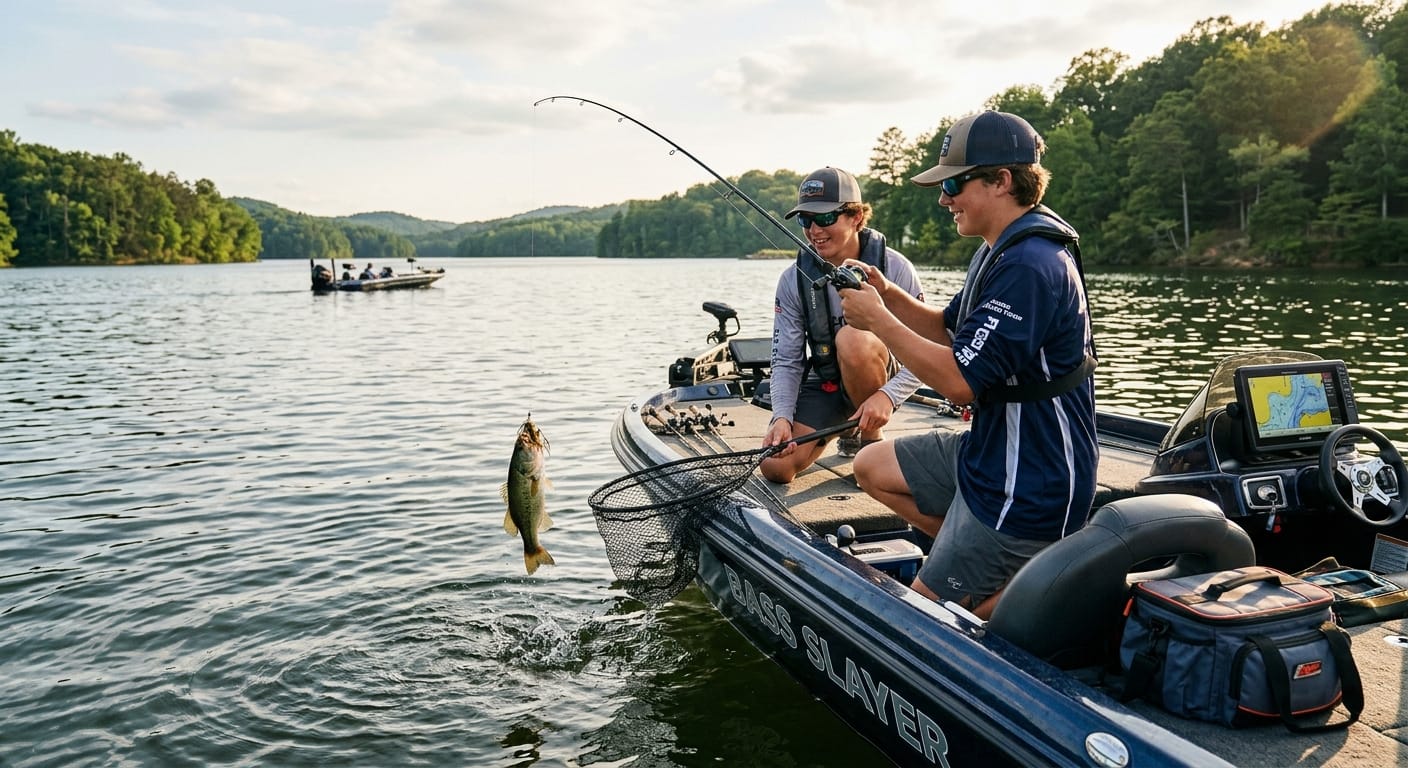
In high school bass tournaments, student anglers compete as co-anglers paired with a licensed adult boater who owns and operates the boat, which means the student fishes from the back of the boat while the boater handles navigation and driving.
If your family does not own a bass boat, this format is what makes high school fishing accessible. The boater provides the vessel, pays for fuel, and is responsible for the boat’s operation on the water. The student brings their own rods, tackle, and personal gear. It is a partnership, and most boaters who volunteer for these events genuinely want to help young anglers succeed.
Understanding what your student is expected to bring versus what the boater provides saves a lot of confusion at the ramp. The boater handles the boat, the safety equipment mounted to the boat, and navigation. Your student is responsible for their own fishing license (required in most states even for minors in tournament competition), their tackle, and their personal safety gear if the tournament requires students to bring their own life jacket. Check your specific tournament rules on that last point because it varies by series.
As a parent, you do not ride along. Your job is to be at the ramp for check-in, know where the weigh-in is happening, and be there when your student comes off the water. Some tournaments hold weigh-in at the same ramp, others use a separate location. Confirm this the night before.
What should a student pack for their first tournament?
A student fishing their first tournament needs their fishing license, a valid state-issued ID, a Coast Guard-approved life jacket if required by the rules, their rods and tackle, water, food, and sun protection for a full day on the water.
The tackle question is the one students obsess over, and it matters, but it is not the only thing that matters. Sun exposure on open water for six to eight hours is no joke. Pack sunscreen, a buff or sun shirt, polarized glasses, and a hat. Dehydration and sunburn are the two things most likely to derail a first tournament experience, and both are completely preventable.
Food and water deserve more space in the bag than most first-timers give them. The boater may have snacks to share, but do not assume that. Pack enough water for the full day and bring food that holds up in heat. Energy bars, sandwiches in a sealed bag, and fruit all work fine. A small soft cooler with ice is worth the space.
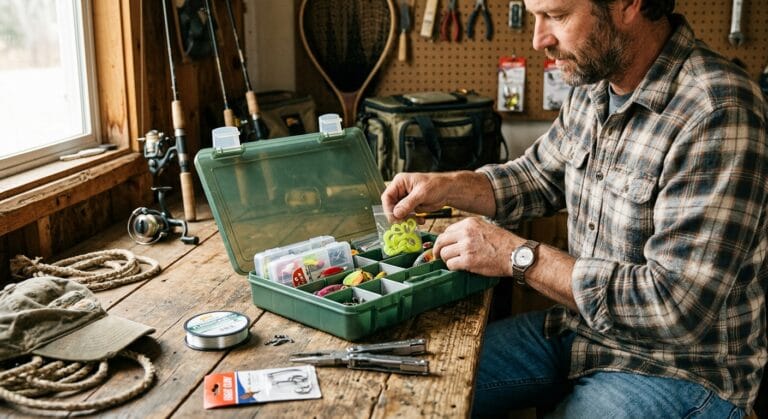
On the tackle side, keep it simple. A few proven setups that your student has confidence in will outperform a tackle bag stuffed with unfamiliar options. Tournament nerves are real, and fishing with baits you trust is one less variable to manage. If your student has been preparing with local intel and pattern work leading into the event, they already know what should be on those rods.
What safety rules do parents and students need to know before tournament day?
High school fishing tournaments enforce strict on-water safety rules including mandatory life jacket wear during blast-off and high-speed boat travel, a kill switch requirement, and zero-tolerance policies for alcohol, which parents should review with their student before the event.
Life jacket rules are non-negotiable. Most tournament series require anglers to wear a Coast Guard-approved personal flotation device any time the combustion engine is running above idle. This means during blast-off and during any run to a new location. Violations can result in disqualification. Make sure your student understands this is not optional and that it applies to them even though they are not driving the boat.
Kill switches, also called engine cut-off switches or ECOS, are required on all boats in most series. The boater clips the lanyard to their body so the engine cuts if they leave the helm unexpectedly. This is a Coast Guard safety regulation that tournament officials take seriously. You do not need to manage this, but knowing it exists helps you understand that these events run with real safety infrastructure in place.
Most high school fishing organizations also have a code of conduct that covers behavior on and off the water. Sportsmanship, respect for other anglers on the lake, and honest fish handling all fall under this umbrella. Your student represents their school. A conversation about expectations before the first event is time well spent.
How does the points race work across a full season?
High school bass fishing seasons are built around a points system where each tournament finish earns a set number of points, and the cumulative total across the season determines state or regional championship qualification.
One tournament result rarely makes or breaks a season. That context matters for new competitors and their parents. A rough first event is not a disaster. The anglers who consistently show up prepared, fish smart, and manage their weight across the full schedule are the ones who end up on the right side of the points standings when qualifying cutoffs arrive.
Points structures vary by league and state organization. In some formats, every angler who checks in earns a baseline number of points just for competing, with bonus points added based on finish position and weight. In others, the standings are more strictly tied to placement. Know which system your league uses because it changes how you should think about each individual tournament.
Some series also have big-fish side events or team-of-the-year awards layered on top of the standard points race. These are worth understanding before the season gets going, because the strategy for targeting a big-fish award is different from the strategy for grinding out a consistent points finish across a long schedule.
What happens at the weigh-in and what should parents expect to see?
At weigh-in, teams bring their five best bass to the scales in a livewell bag, officials record the weight, fish are released, and final standings are posted, with the whole process taking anywhere from thirty minutes to over an hour depending on field size.
Weigh-in is the most visible part of tournament day and the part parents look forward to most. Each team brings their catch to the scales in a bag, officials dip the bag and weigh it, the weight gets announced and recorded, and then the fish go back into the water or a release tank. The process moves quickly when the field is small and takes longer when dozens of teams are working through the line.
Dead fish penalties are part of the weigh-in process. If a fish in a team’s bag is not alive when it hits the scales, most tournaments assess a penalty, typically a fraction of a pound per dead fish deducted from the total weight. Students learn quickly that proper livewell management during the day matters as much as catching fish in the first place. Aerators, water temperature, and refreshing the livewell throughout the day all contribute to fish arriving alive at the scales.
For parents standing at weigh-in, this is a good moment to simply be present and supportive regardless of the result. A team that caught two fish is still learning the game. A team that zeroed but made smart decisions on the water is closer to figuring it out than the scoreboard shows. The season is long, and first events are about building comfort with the format as much as anything else.
Your student’s first tournament day will be louder, faster, and more exciting than either of you expects. Knowing how the format works, what to bring, and where to be at weigh-in takes most of the guesswork out of it and lets your student focus on actually fishing.
If your student is starting to put real time into their pre-tournament prep, understanding water conditions and pattern intel before blast-off is where the serious improvement happens. Bite Blueprint’s AI-powered tournament reports are built for competitive anglers who want that edge already organized and ready before they load the boat.
Common questions
Does my student need a fishing license to compete in a high school bass tournament?
In most states, yes. Even minor anglers typically need a valid state fishing license to compete in organized tournament events. Some states offer reduced-cost or free youth fishing licenses, but the requirement to have one still applies. Check your state wildlife agency’s website before the first tournament and make sure the license is in hand at check-in, because officials will verify it.
What if my student does not get along with their assigned boater?
Most high school fishing organizations have a tournament director or parent liaison you can contact if there is a genuine compatibility issue or a safety concern. Minor friction is normal and part of learning to work with different people, but serious concerns about conduct or safety should be reported to an official immediately. Document what happened and contact the league directly rather than trying to resolve it at the ramp.
Can parents follow along on the water during the tournament?
Generally, no. Tournament water is restricted to registered competitors during fishing hours. Parents are not permitted to follow in a separate boat or communicate with their student about fish locations while the tournament is in progress. Most organizations have strict rules about outside assistance because it creates an unfair advantage. Save the conversation for after weigh-in.
How early should we arrive at the ramp on tournament morning?
Plan to arrive at least thirty minutes before the posted check-in opening time, not the closing time. Ramp parking fills up fast, launching order gets established early, and tournament officials start working through registrations quickly. Arriving late creates stress for your student before they ever get in the boat, and some events close check-in strictly at the posted time with no exceptions.